Nobody gives you a real answer to this question about how long an injury case will take. Ask a law firm's website, and you'll get the answer: "Every case is different." Ask an adjuster, and they'll tell you something is coming soon while stringing you along for months. Ask a friend who went through it, and they'll tell you it took forever, but they can't explain why.
Our blog, by our Oklahoma personal injury attorneys, gives you actual ranges, actual phase descriptions, and an honest account of where time gets lost in Oklahoma personal injury cases. It won't tell you exactly when your case will settle. No one can. But it will tell you what's happening at each stage, how long each stage typically runs, and what variables push timelines out.
Get A Free Consultation NowTable of contents
- Overview for Timeline for Oklahoma Personal Injury Claim
- Start Here: Why Cases Take as Long as They Do
- Phase 1: Medical Treatment and the Road to MMI
- Phase 2: Demand Letter and Initial Negotiation
- Phase 4: Discovery
- Phase 5: Mediation
- Phase 6: Trial
- What Makes Oklahoma Cases Take Longer Than the Averages
- The Two-Year Deadline You Cannot Miss
- The Settlement vs. Waiting Tradeoff
- Ask Carr & Carr: Oklahoma Personal Injury Timeline Questions
- Your Timeline Starts the Moment You Call
- How Long Does a Personal Injury Case Take in Oklahoma? Questions Our Attorneys Hear Most
Overview for Timeline for Oklahoma Personal Injury Claim
- The single biggest driver of the timeline is whether you've reached maximum medical improvement (MMI). Cases shouldn't settle before then.
- A clear liability, soft-tissue case in Oklahoma typically resolves in 4 to 9 months without filing a lawsuit.
- Serious injury, disputed liability, or a lowball insurer adds 12 to 24 months or more to the timeline.
- Oklahoma's statute of limitations is two years from the date of injury. Missing it ends your case.
- The choice between settling quickly and waiting for full value is yours to make. An Oklahoma personal injury attorney can show you what each path looks like financially, but the decision belongs to you.
Start Here: Why Cases Take as Long as They Do
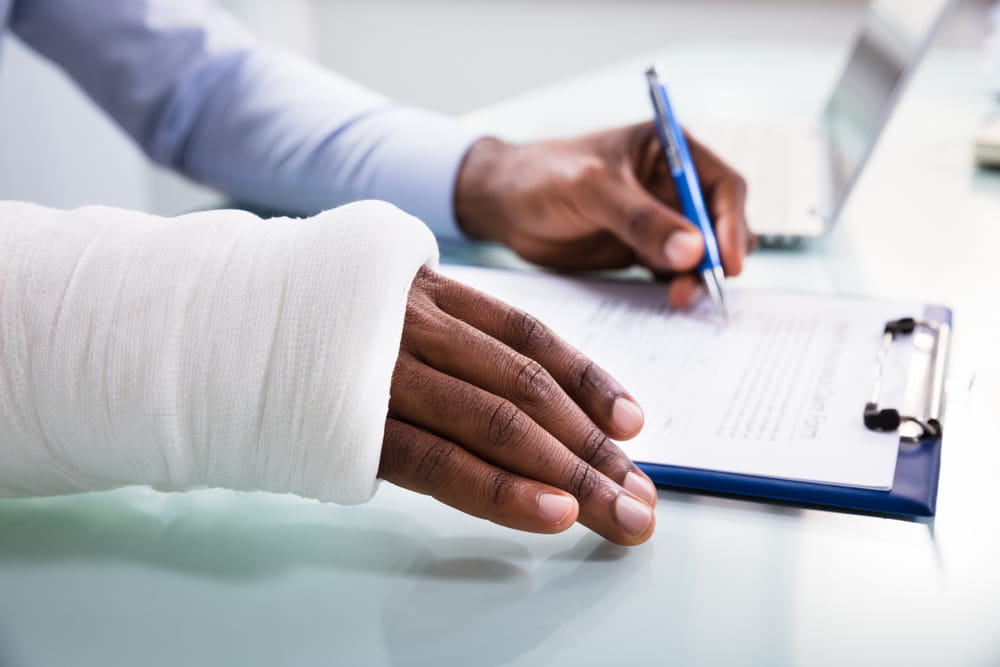
The most time-consuming part of a personal injury case isn't paperwork. It's waiting to know how badly you're hurt.
That might sound obvious, but it has real consequences for the timeline. If you settle a case before your doctor has determined whether your back injury will require surgery, you may sign away your right to compensation for a surgery that ends up costing $80,000. Insurance companies know this. Some of them will push a quick settlement offer specifically because you don't yet know the full extent of your injuries.
The phrase our attorneys and others use is maximum medical improvement, or MMI. It means the point at which your condition has stabilized, either because you've fully recovered or because your doctor has concluded that further treatment won't produce further improvement. Until you reach MMI, you don't have a complete medical picture. Without a complete medical picture, you can't calculate a fair settlement number.
This is the primary reason cases that seem straightforward take six months or more. The clock on your legal case doesn't run independently of the clock on your medical recovery.
Phase 1: Medical Treatment and the Road to MMI
Typical duration: 1 to 18 months
After a car accident, the medical treatment phase runs parallel to everything else. Your attorney is gathering records, your insurer may be investigating, but the legal case can't move forward in a meaningful way until treatment is complete or has stabilized.
For soft tissue injuries, meaning sprains, strains, whiplash, and similar injuries that don't require surgery, MMI often comes within 3 to 6 months. Physical therapy, chiropractic care, and conservative treatment end, your doctor releases you, and the case can move to the demand stage.
For more serious injuries, this phase runs much longer. A herniated disc requiring surgery might put MMI at 12 months or beyond. A traumatic brain injury may have ongoing symptoms for years, which creates a different kind of calculation: how do you settle a case when the full extent of harm isn't yet clear? In those cases, attorneys often work with life care planners and medical experts to project future costs rather than waiting indefinitely.
Orthopedic injuries, spinal injuries, and TBIs all push this phase out. So does any complication in your treatment, a surgery that doesn't go as planned, or a gap in treatment that an insurer can later argue shows your injury wasn't serious.
Phase 2: Demand Letter and Initial Negotiation
Typical duration: 1 to 3 months
Once you've reached MMI and our attorney has collected all your medical records, bills, wage-loss documentation, and other supporting materials, they prepare a demand package and send it to the at-fault driver's insurer.
The demand letter sets out the facts of the crash, the injuries, the treatment, the costs, and the amount your attorney is asking for. The insurer then has a period of time to respond. In Oklahoma, there's no statutory deadline forcing an insurer to respond to a pre-suit demand within a specific number of days, but most respond within 30 days. Some take longer.
The insurer's response is rarely an acceptance. It's usually a counteroffer, often significantly lower than the demand. Negotiation follows. In clear-liability cases with moderate injuries and complete medical documentation, a settlement can sometimes be reached in this phase without ever filing a lawsuit.
If negotiations stall, there are two options: accept a number that doesn't fully compensate you, or file suit.
Phase 3: Filing a Lawsuit in the Oklahoma District Court
Typical duration before trial: 12 to 24 months after filing
Filing a lawsuit is not the end of the road. In most cases, it's the beginning of a longer negotiation.
In Oklahoma, personal injury cases are filed in district court. The case is assigned to a judge, and the court will typically enter a scheduling order setting deadlines for discovery, expert disclosures, dispositive motions, and trial. In Oklahoma County and Tulsa County, those scheduling orders often put trial dates 18 to 24 months out from filing, sometimes longer depending on court docket congestion.
That sounds discouraging. But a trial date 24 months away doesn't mean your case takes 24 months after filing to resolve. Most cases filed in the Oklahoma district court settle before trial. The lawsuit filing itself often changes the insurer's posture because they now have actual litigation costs, deposition costs, and expert fees to worry about. That changes their math.
Phase 4: Discovery

Typical duration: 6 to 12 months
Discovery is the formal exchange of information between the parties. In an Oklahoma personal injury case, this typically includes written interrogatories (questions answered under oath), requests for production of documents, depositions of the plaintiff, the defendant, and expert witnesses, and independent medical examinations requested by the defense.
This is where comparative fault becomes expensive for everyone. Oklahoma follows modified comparative negligence with a 51 percent bar. If the insurer's defense strategy involves arguing that you were partially at fault for the crash, they'll use discovery to build that argument: phone records, dashcam footage, witness statements, and prior medical history. Your attorney counters with evidence, expert testimony, and their own depositions of the defendant.
Discovery takes time. Depositions have to be scheduled around everyone's calendar. Expert witnesses take weeks to produce reports. If the defense requests an independent medical examination, you'll attend it, and then your attorney may need time to respond to whatever that doctor says.
Phase 5: Mediation
Typical duration: 1 day, but scheduled weeks or months out
Most Oklahoma personal injury cases go through mediation before trial. Mediation is a structured settlement negotiation with a neutral third-party mediator, typically a retired judge or experienced attorney. Both sides come in with their best numbers, the mediator works back and forth between them, and a significant percentage of cases settle in mediation.
Mediation is often scheduled 3 to 6 months before a trial date. Oklahoma courts increasingly require it. If mediation fails, the case goes to trial.
Phase 6: Trial
Typical duration: 1 to 5 days, plus prep time
Oklahoma personal injury trials in district court are jury trials. A Tulsa County or Oklahoma County jury hears the evidence, receives instructions from the judge, and returns a verdict. If your case makes it to trial, you're looking at total timelines from injury to verdict that can run 3 to 4 years, occasionally longer in complex cases.
Trial outcomes are uncertain. Juries are unpredictable. Some plaintiff verdicts come back higher than the settlement offers on the table. Some come back lower. A few come back zero. That uncertainty is one reason cases settle before trial, even when both sides believe in their positions. Certainty has value.
What Makes Oklahoma Cases Take Longer Than the Averages
Disputed Liability, Policy Limits, and Pre-Existing Conditions All Add Time
- Disputed liability. If the insurer argues you were partially at fault, every stage of the case takes longer. They'll investigate more, produce more discovery, and negotiate harder. Oklahoma's 51 percent bar means if they can get a jury to assign you 51 percent of the fault, you recover nothing. That's a strong incentive for them to fight.
- Policy limits. If the at-fault driver's policy limits are low and your injuries are serious, the case dynamics shift. Low-limits cases sometimes resolve faster because there's a firm ceiling on recovery. But if your injuries substantially exceed those limits, the conversation about underinsured motorist coverage adds another layer to the negotiation.
- Multiple defendants. Truck accident cases, government entity cases, and product liability cases often involve multiple defendants. Each defendant adds complexity, adds discovery, and adds negotiation variables.
- Pre-existing conditions. If you have prior injuries to the same part of your body, expect the insurer to argue aggressively that your current symptoms predated the crash. That argument takes time to counter with medical records and expert testimony.
- Unrepresented claimants. People who handle their own injury claims without an attorney often wait longer, get lower offers, and are more likely to settle before MMI. Many claimants find it helpful to consult with an attorney before deciding how to proceed, even for cases that appear straightforward. A free consultation can clarify what the process actually looks like.
The Two-Year Deadline You Cannot Miss

Oklahoma's statute of limitations for personal injury cases is two years from the date of injury. Miss that deadline and your case is over, regardless of how strong your facts are.
Two years sounds like a long time. It isn't, especially when you factor in months of medical treatment, weeks spent collecting documents, and the time it takes to find and retain an attorney. Cases that seem like they'll resolve quickly sometimes don't. If you're still treating at the 18-month mark and negotiations are going nowhere, you may be close to a deadline without realizing it.
One nuance: if a government entity is involved in your case (a city vehicle, a road defect, a school bus), Oklahoma's governmental tort claims act requires you to file a notice of claim within one year of the incident, not two. That's a separate and shorter deadline that catches people off guard.
The Settlement vs. Waiting Tradeoff
This is the conversation most attorneys don't have openly enough with their clients.
Settling faster usually means settling for less. Insurance companies know that the longer a case drags on, the more financial pressure builds on the plaintiff. Medical bills pile up. Lost income continues. The prospect of waiting another 18 months for a trial becomes genuinely difficult for someone whose family is under financial stress.
Waiting yields better outcomes when the injury is serious, future costs are real, and the evidence of liability is strong. A client with a permanent spinal injury who settles at month eight for $85,000 may have received $400,000 at trial two years later, or $300,000 in mediation at month 20. Those numbers aren't guaranteed. But the calculation exists, and it's worth making explicitly.
Ask Carr & Carr: Oklahoma Personal Injury Timeline Questions
How long does a car accident case take in Oklahoma?
It depends on your injuries. A clear-liability soft-tissue case in Oklahoma typically resolves in 4 to 9 months without a lawsuit. Serious injuries or disputed liability stretch the timeline to 12 to 24 months or longer. The biggest variable is reaching maximum medical improvement, because cases should not settle before that point.
What if I need money now but my case isn't finished yet?
Financial pressure during a pending case is common. Some claimants explore lawsuit funding through third-party companies, though those come with costs worth understanding before signing. Our attorneys can explain what that means for your net recovery. Settling early to solve a short-term cash problem usually costs far more in the long term.
The insurance company made me an offer right away. Should I take it?
An early offer usually means the insurer sees value in your claim and wants to close it before your full picture develops. You may not yet know whether surgery or long-term treatment is ahead. Many claimants find it helpful to speak with an attorney before responding to any offer, even informally.
Your Timeline Starts the Moment You Call
Carr & Carr Injury Attorneys offers free consultations for Oklahoma personal injury victims. When you call, we review which phase your case is likely in, what the timeline realistically looks like based on your injuries, and your options. There's no obligation or cost. Call our Oklahoma City office at (405) 691-1600 or our Tulsa office at (918) 747-1000.
Get A Free Consultation NowHow Long Does a Personal Injury Case Take in Oklahoma? Questions Our Attorneys Hear Most
Yes, but you waive all future claims. If your injury worsens after signing, there’s no going back, regardless of new medical costs.
Claimants represented by us typically receive faster responses from insurers. Adjusters treat unrepresented claimants differently, often responding more slowly to documentation requests and faster with lowball offers.
Your claim survives. It proceeds against their estate and their liability insurance policy, though the process involves additional legal steps.
No. A signed release is permanent. This is the primary reason settling before reaching MMI is so risky for seriously injured claimants.
Potentially yes. A pending bankruptcy may require disclosing your injury claim as an asset. Timing matters significantly and varies by bankruptcy chapter.