It may be possible to sue someone for hitting you on a bike if their negligence caused the accident and your injuries. Cyclists have the same legal rights as drivers, and when those rights are violated, the law provides a path to seek compensation.
Legal insights from an Oklahoma bicycle accident injury attorney at Carr & Carr can clarify how state traffic laws protect cyclists and how to build a strong case against the at-fault driver.
Whether the accident was caused by distracted driving, failure to yield, or another form of negligence, a lawyer can help you understand your options, challenge unfair fault assignments, and work toward a resolution that holds the responsible party accountable.
Get A Free Consultation NowKey Takeaways About Suing After a Bike Accident
- Cyclists have rights on the road. In Oklahoma, bicycles are considered vehicles, meaning cyclists have the same rights and responsibilities as drivers. When a motorist fails to respect these rights, such as by unsafe passing or opening a door into a bike lane, they can be held liable for the resulting damages.
- Proving negligence is key to recovering the maximum compensation you may be eligible for under the law. Winning a bike accident lawsuit typically requires proving the driver breached their duty of care. This often involves gathering strong evidence to show that the driver was distracted, speeding, or violating traffic laws.
- Comparative negligence affects compensation. Oklahoma follows a modified comparative negligence rule (51% bar). If you are found to be partially at fault for the accident, your compensation may be reduced. A lawyer can help minimize any fault assigned to you to maximize your potential recovery.
- Statutes of limitation apply to bike crash injury claims. You generally have two years from the date of the accident to file a lawsuit in Oklahoma (Oklahoma Statutes §12-95). Missing this deadline usually bars you from seeking compensation, making early legal intervention important.
What Are Your Rights as a Cyclist in Oklahoma?

Many people believe that because a bicycle is smaller than a car, the cyclist automatically assumes more risk. However, the law sees it differently. Cyclists are entitled to share the road, and motorists have a legal duty to drive safely around them. When a driver violates this duty, they open themselves up to liability.
The legal concept behind most bike accident claims is negligence. To sue a driver, you typically need to show four things:
- Duty: The driver had a responsibility to operate their vehicle safely.
- Breach: The driver failed in that responsibility (e.g., by texting while driving or running a red light).
- Causation: That failure directly caused the accident.
- Damages: You suffered actual harm, such as physical injuries or financial losses, as a result.
A bicycle accident lawyer thoroughly investigates these elements. They look for proof that the driver's actions fell short of what a reasonable person would do in the same situation.
Common Causes of Bike Accidents and Proving Fault
Bicycle accidents often happen because drivers simply aren't looking for cyclists. "Inattentional blindness" is a real phenomenon where drivers scan for other cars but fail to register a bike. While this explains why the accident happened, it does not excuse the driver from liability.
Distracted Driving
Distracted driving includes more than just texting. It can involve any activity that takes a driver's focus off the road, such as eating, adjusting the radio, or interacting with in-car technology.
Proving a driver was distracted often requires evidence like phone records, witness statements, or traffic camera footage. Legal professionals use this information to build a timeline of events and show how the driver's inattention caused the crash.
Failure to Yield
Many collisions occur at intersections where a driver turns left in front of an oncoming cyclist or turns right across a cyclist's path (the "right hook").
Establishing fault here often relies on traffic laws regarding right-of-way. An attorney can analyze the intersection, traffic signal timing, and witness accounts to prove the cyclist had the right of way.
Dooring Accidents
"Dooring" occurs when a driver in a parked car opens their door directly into a cyclist's path. In most jurisdictions, including Oklahoma, the person opening the door is responsible for checking that it is safe to do so.
A lawyer can use physical evidence, such as damage to the bike and the car door, to demonstrate that the driver failed to look before opening.
Unsafe Passing
Drivers are often required to leave a specific distance when passing a cyclist (often 3 feet). If a driver clips a cyclist while trying to squeeze past, they have likely violated this safety statute. Accident reconstructionists can work with your legal team to determine vehicle positioning and prove the driver did not leave adequate space.
The Role of Comparative Negligence in Bike Accident Claims
One of the biggest hurdles in a bike accident lawsuit is the defense claiming the cyclist was also at fault. Insurance companies frequently argue that the cyclist was moving too fast, swerved unexpectedly, or wasn't visible enough.
This tactic aims to use the state's comparative negligence laws to reduce the payout.
In Oklahoma, for example, if a jury decides you were 20% responsible for the crash because your bike lacked a required reflector, your total compensation would be reduced by 20%. If they decide you were 51% or more at fault, you would be barred from receiving any compensation at all.
A bicycle accident attorney fights these allegations aggressively. They understand the specific statutes regarding bike equipment and operation. If the defense claims you were outside the bike lane illegally, your lawyer can counter by citing exceptions in the law that allow cyclists to leave the lane to avoid hazards.
By dismantling these arguments, your attorney works to keep the liability squarely on the negligent driver.
What Damages Can You Recover in a Bike Accident Lawsuit?
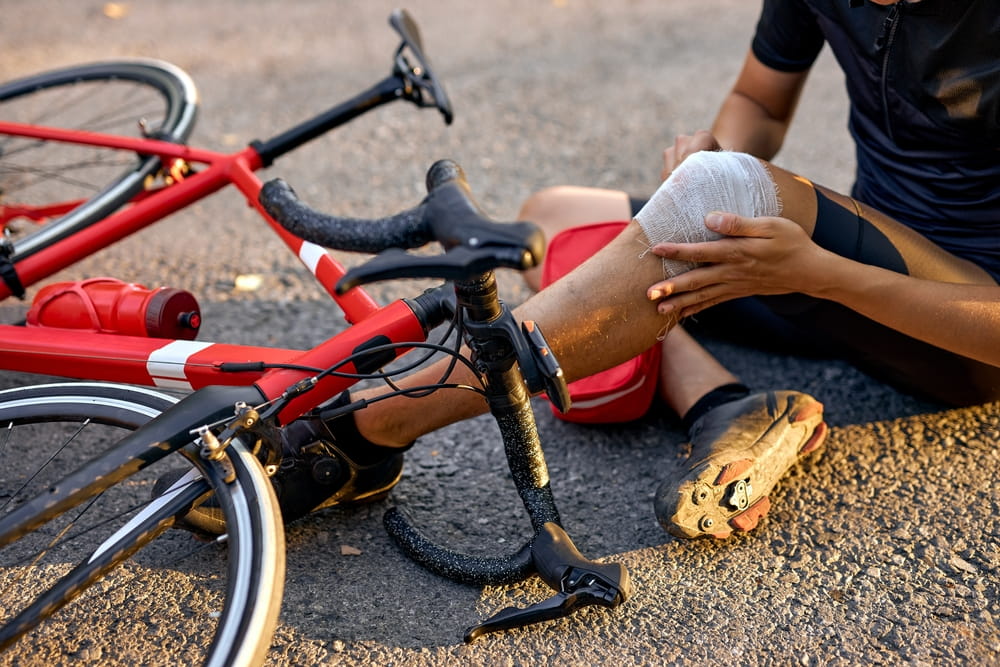
The physical toll of a car-vs-bike collision is often severe. Cyclists lack the protective metal cage of a car, meaning even low-speed impacts can result in broken bones, road rash, or traumatic brain injuries. A lawsuit seeks to make you "whole" again by recovering damages for these losses.
- Medical expenses: This includes emergency room visits, surgeries, hospital stays, and ongoing physical therapy. A lawyer also considers future medical needs, ensuring you aren't left paying for long-term care out of pocket.
- Lost wages: If your injuries keep you out of work, you can sue for the income you lost. If you suffer a permanent disability that reduces your ability to earn a living in the future, your claim can include lost earning capacity.
- Pain and suffering: These are "non-economic" damages that compensate you for physical pain, emotional distress, and the impact the injury has on your daily life.
- Property damage: You are entitled to the repair or replacement cost of your bicycle and any other gear damaged in the crash, such as your helmet, phone, or clothing.
Calculating the true value of these damages is complex. Insurance adjusters often use formulas that underestimate pain and suffering. An experienced attorney relies on medical experts and economic analysts to calculate a fair figure that reflects the reality of your situation.
How to Protect Your Rights After a Bike Accident in Oklahoma
While the law provides clear avenues for holding a negligent driver accountable after a bike accident, certain missteps can complicate your ability to recover maximum compensation. Taking the right actions after the crash can help position your case to recover the maximum allowable compensation under the law:
- Seek follow-up medical treatment, even for minor injuries: Some injuries, like concussions or soft tissue damage, may not show symptoms immediately. Prompt medical care creates a record linking your injuries to the accident and prevents insurers from downplaying your claim.
- Act quickly to consult a lawyer: Early legal intervention helps preserve critical evidence and ensures deadlines, such as Oklahoma's two-year statute of limitations for personal injury claims, are met.
- Be cautious with social media use: Avoid posting about the accident, your injuries, or your recovery. Insurance companies may monitor your online activity and use your posts to undermine your claim.
- Document everything: Take photos of the accident scene, your bike, and your injuries. Keep records of medical bills, repair estimates, and any correspondence with insurance companies.
- Follow your doctor's recommendations: Attend all follow-up appointments and stick to prescribed treatments. Gaps in care can be used to argue that your injuries aren't as serious as claimed.
By taking these steps, you not only protect your rights but also give your lawyer the tools they need to challenge unfair tactics and pursue the compensation you may be entitled to under the law.
FAQs About Bike Accident Lawsuits
What if the driver who hit me doesn't have insurance?
How long do I have to file a bike accident claim?
Can I still sue if I wasn't wearing a helmet?
What if I was riding on the sidewalk?
Pursuing Justice After a Bike Accident With the Help of Experienced Personal Injury Attorneys in Oklahoma
Recovering from a bicycle accident means addressing more than just physical injuries. Knowing that the law provides a path to hold the responsible driver accountable can help you regain control and focus on rebuilding your life.
The legal process doesn't have to be intimidating. With the right legal team by your side, you can navigate the complexities of your claim and work toward securing the compensation you need.
If you or someone you care about has been injured in a bike accident, reach out to Carr & Carr Injury Attorneys for a free case evaluation. Our team is ready to discuss your case and help you pursue the justice and financial recovery you may be entitled to under the law.
Get A Free Consultation NowLegal Resources About Personal Injury Lawsuits in Oklahoma
The resources below are carefully curated to provide clarity on key aspects of personal injury claims, helping you understand your rights and the steps involved in pursuing compensation:
- How a Personal Injury Lawyer Can Add Value to Your Case
- Can You Sue for Loss of Enjoyment of Life?
- Scott Carr Discusses Traumatic Brain Injuries
For tailored advice and support, connect with the team at Carr & Carr Injury Attorneys. We're here to help you take the next step toward justice and recovery.